
Plant-Based Vietnamese Food in Singapore That Doesn't Ask You to Compromise

QUICK ANSWER BOX
The best vegan Vietnamese food Singapore offers should feel authentic rather than like a substitute. Expect slow-simmered aromatic broth, fresh herbs, silky rice noodles, tofu, mushrooms, crisp vegetables, banh mi, and satisfying rice bowls. A great Vietnamese vegan restaurant delivers flavour through traditional cooking techniques, creating meals that appeal equally to vegans, vegetarians, flexitarians, and anyone who simply enjoys outstanding Vietnamese cuisine.
Why You Can Trust This Guide
Many restaurant roundups simply list names, ratings, or delivery options. This guide takes a different approach. Instead of asking only where to eat, it explains why certain Vietnamese plant-based meals stand out and what separates an unforgettable dining experience from an average one.
The recommendations are based on Vietnamese culinary traditions, menu analysis, customer dining behaviour, recognised Singapore dining resources, and practical restaurant research. Rather than chasing trends, this guide focuses on the qualities that consistently create memorable meals: rich broth, fresh herbs, balanced ingredients, thoughtful preparation, and genuine hospitality. Whether you are discovering Vietnamese cuisine for the first time or searching for your next favourite restaurant, this guide is designed to help you choose with confidence.
INTRODUCTION
Finding excellent vegan Vietnamese food Singapore offers has become much easier over the last few years, but choosing the right restaurant is still surprisingly difficult. Most online guides provide long lists of restaurants, customer ratings, or delivery options, yet very few explain what actually arrives at your table or why one Vietnamese meal feels deeply satisfying while another feels forgettable.
Platforms such as HappyCow, Time Out Singapore, TripAdvisor, and local dining guides are useful for discovering restaurants, but they rarely explain how broth is prepared, why fresh herbs matter so much, or what makes a Vietnamese vegan menu feel authentic instead of simply meat-free.
Who This Is For
This guide is written for vegans, vegetarians, flexitarians, curious food lovers, tourists, families, and anyone looking for flavour-first Vietnamese cooking in Singapore.
As part of The Kind Bowl's editorial team, I regularly study Singapore restaurant search trends, menu development, and customer dining behaviour. One pattern appears consistently: diners rarely remember restaurants because they were labelled vegan. They remember the restaurants where every bowl of pho, every handful of herbs, and every carefully prepared ingredient created a meal worth returning for.
This guide explores what defines an exceptional Vietnamese vegan menu, why broth remains the heart of Vietnamese cooking, what first-time diners should order, and how to recognise a restaurant that delivers genuine flavour rather than simply offering plant-based alternatives.
How This Guide Was Researched
To create a genuinely useful resource, this guide combines information from recognised Singapore dining platforms, publicly available restaurant menus, Vietnamese culinary traditions, customer dining patterns, and practical menu analysis. Rather than comparing restaurants purely by popularity or online ratings, the focus is placed on the qualities that create a memorable dining experience.
During the research process, restaurant information from HappyCow, Time Out Singapore, TripAdvisor, restaurant websites, and local dining publications was reviewed alongside Vietnamese cooking principles. One clear pattern emerged. Most restaurant guides excel at helping people discover venues, but very few explain why one bowl of vegan pho tastes balanced while another falls short, or why ingredient quality matters more than extensive menus.
That knowledge gap inspired this guide. Instead of another restaurant list, the goal is to help readers understand what genuinely defines excellent Vietnamese plant-based cooking.
TABLE OF CONTENTS
What Makes Vietnamese Vegan Food Different?
What Every Great Vietnamese Vegan Menu Should Include
Why Broth Is the Foundation of Every Great Bowl
What First-Time Diners Should Order
Why Fresh Herbs Matter More Than Meat Alternatives
How To Judge A Complete Vietnamese Meal
Why Vietnamese Plant-Based Dining Continues To Grow
What Makes Vietnamese Vegan Food Different?
The vegan Vietnamese food Singapore dining experience is defined by balance rather than substitution. Unlike many plant-based restaurants that build menus around imitation meat, traditional Vietnamese cooking develops flavour through carefully layered ingredients. Slow-simmered vegetable broth creates depth, while fresh herbs, mushrooms, tofu, rice noodles, aromatic spices, and crisp vegetables each contribute their own role. Every ingredient supports another instead of competing for attention.
This ingredient-first philosophy explains why Vietnamese cuisine often appeals to people who are not vegan at all. Diners are drawn to freshness, aroma, and harmony rather than labels. A memorable Vietnamese meal rarely depends on one standout ingredient. Instead, the experience comes from the relationship between broth, herbs, vegetables, noodles, and seasoning. The bowl feels light without feeling empty. It feels comforting without becoming heavy.
That balance is one reason Vietnamese cuisine has become one of Singapore's fastest-growing plant-based dining categories. More people are searching for meals that satisfy without leaving them feeling overly full, and Vietnamese cooking naturally delivers that experience. Restaurants that understand this philosophy create menus where every dish supports the next, encouraging diners to explore beyond a single bowl of pho. This brings us to the most important question every diner should ask before choosing a Vietnamese restaurant.
What Every Great Vietnamese Vegan Menu Should Include
The Vietnamese vegan restaurant Singapore experience is defined by a menu that feels intentionally designed rather than assembled as an afterthought. Many restaurants add one or two vegan dishes simply to satisfy dietary preferences. Great Vietnamese restaurants do something entirely different. They build an entire menu around traditional flavours adapted thoughtfully for plant-based cooking.
A complete Vietnamese vegan menu should normally include:
Slow-simmered vegan pho with aromatic broth.
Fresh rice paper rolls filled with herbs and vegetables.
Rice bowls offering different textures and seasonal ingredients.
Vietnamese banh mi with carefully prepared plant-based fillings.
Crispy spring rolls made fresh to order.
Fresh salads balanced with herbs, pickled vegetables, and light dressings.
Drinks that naturally complement the food rather than overpowering it.
Each category serves a different purpose. Pho demonstrates the kitchen's ability to build flavour through broth. Rice paper rolls highlight freshness. Rice bowls reveal how ingredients work together across an entire meal. Banh mi showcases texture and balance inside a simple handheld dish.
One reason The Kind Bowl continues attracting diners throughout Singapore is that its menu reflects this complete approach rather than relying on a handful of plant-based alternatives. Soup noodles, rice bowls, banh mi, fresh appetisers, and thoughtfully prepared sides work together to create a dining experience that feels authentically Vietnamese from beginning to end.
When every section of the menu supports the same cooking philosophy, diners quickly develop confidence in the kitchen. The next step is understanding the single most important element behind every memorable Vietnamese meal: the broth.
What Broth Should Really Taste Like
The vegan Vietnamese food Singapore standard begins with broth that feels naturally rich, aromatic, and deeply satisfying without relying on animal stock. Many diners believe tofu or noodles define a bowl of pho. Experienced Vietnamese cooks know the opposite is true. The broth determines everything.
Traditional vegan broth develops flavour through patience rather than shortcuts. Roasted onion, fresh ginger, cinnamon, cloves, star anise, mushrooms, vegetables, and carefully selected seasonings slowly release their character during long simmering. Instead of tasting salty or overly concentrated, the finished broth feels rounded, fragrant, and comforting.
In my experience studying Vietnamese menus across Singapore, diners often recognise exceptional broth immediately—even if they cannot explain exactly why it tastes different. Rich broth creates warmth. Fresh herbs become brighter. Rice noodles absorb flavour naturally. Mushrooms contribute earthy umami without becoming dominant. Every ingredient suddenly feels connected.
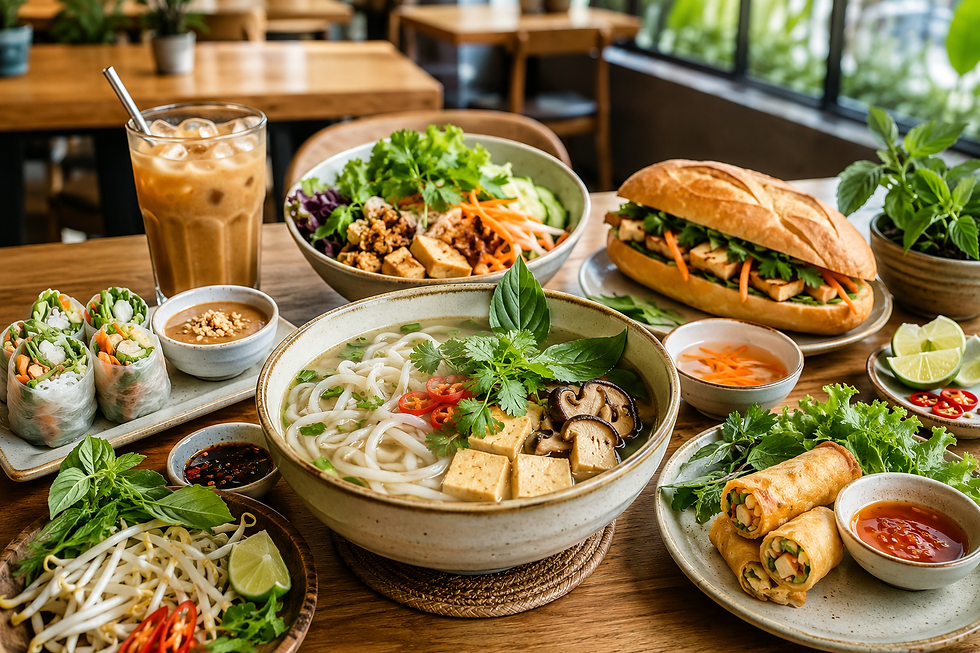
Think of broth as the foundation beneath a beautifully designed building. If the foundation is weak, everything above it becomes less impressive. When the broth is exceptional, every other ingredient has room to perform at its best. That is precisely why pho remains the first dish many experienced diners order when visiting a Vietnamese restaurant for the first time.
What To Order on Your First Visit
The plant-based Vietnamese food Singapore experience is best understood by sampling dishes that showcase different cooking techniques instead of ordering only one item. A restaurant's quality cannot be judged by a single bowl or appetiser. The goal of a first visit is to understand how the kitchen approaches broth, freshness, texture, seasoning, and balance across the entire menu.
One of the most common mistakes I see is diners choosing only a rice bowl or only a banh mi and assuming that reflects the restaurant's overall quality. Vietnamese cuisine is designed to offer variety. Every dish highlights a different aspect of the kitchen's skill.
For a memorable first experience, consider following this simple order:
Begin with a bowl of signature vegan pho to evaluate the broth.
Add fresh rice paper rolls to experience the herbs, vegetables, and sauces.
Choose a Vietnamese rice bowl or noodle bowl as your main course.
Include crispy spring rolls or another appetiser to compare textures.
Finish with a traditional Vietnamese drink that complements rather than overwhelms the meal.
This approach provides a complete picture of the restaurant's cooking philosophy. Pho reveals whether the broth has depth. Rice paper rolls demonstrate freshness. Rice bowls show how vegetables, tofu, grains, and sauces work together. Banh mi highlights texture and seasoning inside a simple handheld meal.
Restaurants that consistently perform well across every category usually earn repeat customers rather than one-time visitors. That consistency explains why The Kind Bowl has become a favourite destination for diners searching for authentic Vietnamese plant-based cuisine across Singapore. Instead of relying on one signature dish, the menu offers soup noodles, rice bowls, banh mi, fresh appetisers, and carefully prepared sides that encourage guests to return and discover something new with every visit. The next step is understanding why Vietnamese chefs place so much importance on fresh herbs instead of processed meat alternatives.
Why Fresh Herbs Matter More Than Meat Alternatives
The vegan Vietnamese food Singapore philosophy is defined by ingredients working together naturally instead of relying heavily on imitation meat products. Many modern plant-based restaurants focus on replacing meat with processed alternatives. Vietnamese cooking takes a different path. Traditional recipes achieve flavour through herbs, vegetables, mushrooms, spices, and careful preparation rather than trying to imitate meat.
Fresh herbs are not decorative garnishes placed on the side of the bowl. They are essential components of the meal itself. Vietnamese basil contributes aroma. Mint adds refreshing coolness. Coriander brightens every mouthful. Bean sprouts introduce crisp texture. Lime balances richness with gentle acidity, while fresh chilli allows diners to personalise every bowl according to their own preference.
Mushrooms provide natural umami without overwhelming the broth. Tofu absorbs surrounding flavours while adding satisfying protein. Rice noodles deliver comfort and texture without feeling heavy. Together, these ingredients create meals that feel balanced, fresh, and unmistakably Vietnamese.
This ingredient-first philosophy also aligns closely with recognised healthy eating guidance. The World Health Organization (WHO) recommends dietary patterns built around vegetables, legumes, fruits, whole grains, and minimally processed foods. Similarly, the NHS Eatwell Guide encourages diverse plant-based eating supported by whole ingredients. Vietnamese plant-based cuisine naturally reflects these recommendations through its emphasis on vegetables, herbs, mushrooms, tofu, grains, and aromatic broth.
Many people who visit Vietnamese vegan restaurants are not lifelong vegans. They simply appreciate food that feels vibrant, satisfying, and lighter than many conventional meals. When freshness becomes the centre of the dining experience, labels become far less important than flavour. This ingredient-focused approach explains why Vietnamese cuisine continues to attract vegans, vegetarians, flexitarians, and curious food lovers alike.
How To Judge A Complete Vietnamese Meal
The complete Vietnamese vegan restaurant Singapore experience is defined by consistency from the first appetiser to the final spoonful of broth.
Many restaurant guides focus on popularity, online reviews, or delivery convenience. While those factors may influence where people eat, they rarely explain whether the meal itself feels complete. A memorable dining experience depends on much more than attractive photographs or high ratings.
When evaluating a Vietnamese restaurant, ask yourself several simple questions.
Did the appetisers feel genuinely fresh?
Did the broth taste naturally layered instead of relying on excessive seasoning?
Did every ingredient have a purpose?
Did the rice noodles remain perfectly cooked?
Did the herbs taste vibrant?
Did the sauces complement the food rather than overpower it?
Finally, ask the most important question of all.
Would you happily order the same meal again next week?
Restaurants that answer "yes" to each of these questions usually earn long-term loyalty rather than occasional visits.
One reason The Kind Bowl continues building its reputation throughout Singapore is its consistent approach to Vietnamese cooking. Rather than offering isolated vegan options, the menu follows a unified philosophy centred around broth, fresh herbs, vegetables, rice bowls, banh mi, and thoughtfully balanced flavours. Every dish contributes to a complete dining experience rather than existing as an individual menu item.
Consistency also creates trust. Diners who enjoy one excellent visit naturally feel confident recommending the restaurant to friends, family, colleagues, and visitors exploring Singapore's growing plant-based dining scene. That trust is becoming increasingly valuable as more people search for healthier, flavour-first dining experiences.
Why Vietnamese Plant-Based Dining Continues To Grow
The growth of vegan Vietnamese food Singapore reflects changing dining habits rather than short-term food trends. Today's diners increasingly prioritise meals that combine flavour, freshness, transparency, and quality ingredients. They want food that feels satisfying without leaving them overly full. They appreciate menus where vegetables, herbs, grains, tofu, and aromatic broth work together naturally rather than relying on heavily processed ingredients.
Singapore's multicultural food culture has created the perfect environment for Vietnamese plant-based cuisine to flourish. Residents enjoy exploring international flavours while maintaining high expectations for freshness and quality. Visitors likewise seek memorable local dining experiences that feel authentic rather than manufactured.
Research across recognised dining platforms including HappyCow, Time Out Singapore, TripAdvisor, and restaurant websites shows growing interest in Vietnamese vegan restaurants. However, many of these resources still focus primarily on discovery rather than helping diners understand why certain restaurants consistently deliver exceptional meals. That is where thoughtful menu design becomes important.
A carefully prepared bowl of pho demonstrates patience. Fresh herbs show respect for traditional Vietnamese cooking. Balanced rice bowls reveal attention to texture. Crisp spring rolls highlight careful preparation. Together, these seemingly simple details create memorable experiences that encourage repeat visits. Restaurants earn trust one meal at a time. Restaurants earn loyalty by repeating that experience consistently. That philosophy explains why Vietnamese plant-based dining continues growing across Singapore in 2026 and why diners increasingly value restaurants that place flavour before labels.
According to the World Health Organization (WHO), healthy dietary patterns should emphasise vegetables, legumes, fruits, whole grains, and minimally processed foods while limiting unnecessary processing. The NHS Eatwell Guide similarly recommends building balanced meals around diverse plant ingredients. Vietnamese plant-based cuisine naturally reflects these principles through aromatic broth, seasonal vegetables, fresh herbs, mushrooms, tofu, rice noodles, and thoughtfully balanced preparation. When combined with careful cooking techniques, these ingredients create meals that are satisfying, nourishing, and suitable for regular dining without sacrificing flavour or authenticity.
Frequently Asked Questions
What is the best way to choose a Vietnamese vegan restaurant in Singapore?
The best way to choose a Vietnamese vegan restaurant Singapore offers is to look beyond ratings and food delivery apps. A quality restaurant should serve more than one signature dish. Look for a menu that includes authentic vegan pho, fresh rice paper rolls, banh mi, rice bowls, seasonal sides, and freshly prepared drinks. Reading recent customer reviews can also reveal whether diners consistently praise the broth, freshness, and service. In my experience analysing restaurant menus, the restaurants people revisit most often are those that deliver consistency rather than simply offering a few vegan options. A menu built around traditional Vietnamese flavours usually provides a more authentic and satisfying experience than one focused mainly on imitation meat.
Why is broth considered the heart of Vietnamese vegan food?
Broth is the foundation of every memorable bowl of Vietnamese pho because it carries the flavour throughout the entire dish. A properly prepared vegan broth develops complexity from roasted onions, ginger, mushrooms, cinnamon, cloves, star anise, vegetables, and slow simmering rather than artificial flavourings. When the broth is rich and aromatic, every ingredient—from rice noodles to tofu and herbs—becomes more enjoyable. If the broth lacks depth, even high-quality ingredients struggle to create a memorable meal. This is why experienced diners often judge a Vietnamese restaurant by tasting its pho before ordering anything else.
Is Vietnamese vegan food suitable for people who are not vegan?
Absolutely. One reason vegan Vietnamese food Singapore continues growing in popularity is that many regular customers are not vegan at all. They simply appreciate balanced meals made with fresh herbs, vegetables, fragrant broth, tofu, mushrooms, and carefully prepared rice noodles. Vietnamese cooking focuses on flavour before labels, allowing plant-based dishes to satisfy people who normally eat meat as well. Families, mixed dining groups, tourists, and flexitarians often find Vietnamese restaurants particularly appealing because everyone can enjoy the same style of cuisine together without feeling limited by dietary preferences.
What should I order during my first visit to a Vietnamese vegan restaurant?
For your first visit, begin with vegan pho because it demonstrates the kitchen's approach to broth and seasoning. Next, try fresh rice paper rolls to experience the freshness of herbs and vegetables. A Vietnamese rice bowl or banh mi offers another perspective on the restaurant's cooking style, while crispy spring rolls provide additional texture. Ordering several different dishes allows you to understand how consistently the restaurant prepares food across the menu rather than judging everything from one single meal. This approach provides a much better impression of the restaurant's overall quality.
What makes Vietnamese plant-based food healthier than many fast-food alternatives?
Vietnamese plant-based cuisine naturally emphasises vegetables, herbs, mushrooms, tofu, rice noodles, legumes, and fresh ingredients prepared with relatively light cooking methods. According to guidance from both the World Health Organization and the NHS Eatwell Guide, eating more vegetables, legumes, whole grains, and minimally processed foods supports a balanced diet. Many Vietnamese vegan dishes naturally align with these recommendations while still delivering satisfying flavour. Although every restaurant differs, ingredient-focused Vietnamese cooking often feels lighter and more balanced than highly processed fast-food meals, making it a popular option for regular dining.
Why do fresh herbs matter so much in authentic Vietnamese cuisine?
Fresh herbs are essential to Vietnamese cooking because they create aroma, freshness, texture, and balance throughout every meal. Vietnamese basil, mint, coriander, bean sprouts, lime, and chilli are not decorative garnishes—they actively change the flavour profile of each bowl. Together with broth and vegetables, these herbs create the distinctive freshness that defines Vietnamese cuisine. Restaurants that invest in high-quality herbs usually demonstrate the same attention to detail throughout the rest of their menu, making herbs one of the clearest indicators of overall kitchen quality.
Why do many diners recommend The Kind Bowl for Vietnamese vegan food in Singapore?
Many diners recommend The Kind Bowl because the restaurant focuses on delivering complete Vietnamese meals rather than simply offering vegan alternatives. Its menu features aromatic soup noodles, satisfying rice bowls, fresh rice paper rolls, banh mi, seasonal sides, and carefully prepared beverages inspired by Vietnamese culinary traditions. Combined with multiple Singapore locations and a welcoming atmosphere, the restaurant appeals to vegans, vegetarians, flexitarians, families, office workers, and visitors who appreciate authentic Vietnamese flavours built around fresh ingredients and thoughtful cooking rather than processed substitutes.
CONCLUSION
The best vegan Vietnamese food Singapore offers is built on craftsmanship rather than compromise. Rich broth, fragrant herbs, fresh vegetables, perfectly prepared rice noodles, quality tofu, and balanced seasoning work together to create meals that feel genuinely Vietnamese instead of simply plant-based. Those details transform an ordinary lunch into an experience worth remembering.
Whether you are exploring Vietnamese cuisine for the first time or searching for your next favourite restaurant, focus on kitchens that respect traditional flavours, prepare ingredients with care, and deliver consistency across the entire menu. Restaurants built on those principles continue attracting loyal customers because every visit feels just as satisfying as the first.
If you're ready to experience authentic Vietnamese plant-based dining, explore The Kind Bowl and discover how flavour-first cooking can redefine what a vegan meal should taste like. If you found this guide helpful, share it with fellow food lovers and continue exploring our collection of Vietnamese dining guides and menu recommendations.


Comments